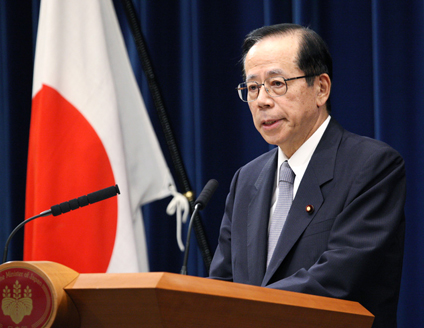
Yasuo Fukuda: Prime Minister of Japan (2007–2008)

kickstand-project.org – Yasuo Fukuda served as the 91st Prime Minister of Japan from September 2007 to September 2008. His tenure was marked by political instability within the ruling Liberal Democratic Party (LDP), a struggling economy, and a growing need for governmental reform in the face of rising public dissatisfaction. Fukuda’s time as Prime Minister was brief, and his leadership was overshadowed by his inability to navigate political challenges both within his party and from the opposition. Despite his calm demeanor and experience in government, his leadership ultimately failed to restore public trust, leading to his resignation after only one year in office.

Early Life and Political Career

Yasuo Fukuda was born on July 16, 1936, in Tokyo, Japan, into a politically prominent family. His father, Takeo Fukuda, served as Prime Minister of Japan from 1976 to 1978, and Yasuo followed in his father’s footsteps, entering the world of politics in the early 1960s. Fukuda graduated from Wako University and soon embarked on a career in public service.

He was elected to the House of Representatives in 1990, representing the LDP. Over the years, Fukuda built a reputation as a steady and pragmatic politician, holding various key government positions. These included roles as Minister for Health and Welfare and Minister for the Environment. Fukuda’s long political career and diplomatic experience were seen as assets when he was chosen to lead the LDP and the country in 2007, following the resignation of then-Prime Minister Shinzo Abe.

Becoming Prime Minister

Fukuda became Prime Minister on September 25, 2007, after Shinzo Abe’s unexpected resignation due to health issues. Abe had struggled with a series of political setbacks and controversies, including a series of scandals and the LDP’s declining popularity. Fukuda was selected to replace him, largely due to his reputation as a more moderate and less divisive figure within the LDP.

Fukuda, known for his calm demeanor and conciliatory approach, promised to rebuild public trust in the government and restore stability to a country facing rising public dissatisfaction and economic challenges. His leadership was seen as an attempt to bridge the gap between the LDP’s traditional conservative policies and the need for reforms to address the evolving needs of Japanese society.

Economic Challenges and Reforms

Fukuda’s time as Prime Minister coincided with a number of significant challenges for the Japanese economy. The global economy was beginning to feel the effects of the 2008 financial crisis, which would soon affect Japan’s export-driven economy. However, even before the global downturn, Japan had been struggling with slow growth, deflation, and a shrinking population.

Fukuda’s government focused on stabilizing the economy and addressing these issues through fiscal and monetary policies. The Prime Minister pushed for economic reforms that would foster innovation and increase Japan’s competitiveness. His government implemented measures to combat deflation and provide support for key industries, such as technology and manufacturing, which were seeing slower growth due to global competition.

Despite these efforts, Fukuda’s administration struggled to achieve meaningful economic improvements, and Japan continued to face slow economic growth. Public confidence in Fukuda’s economic handling began to falter as the global financial crisis deepened, contributing to widespread anxiety about Japan’s future economic prospects.

Domestic Politics and the Opposition

Fukuda’s tenure was also marked by political gridlock. The Democratic Party of Japan (DPJ), the main opposition party, had gained momentum in the 2007 Upper House elections, resulting in a divided parliament. This made it difficult for Fukuda to pass key legislative reforms, as the DPJ and other opposition parties often blocked government proposals.

One of the most significant challenges Fukuda faced was dealing with Japan’s aging population and the fiscal pressures associated with social welfare programs. Fukuda’s government attempted to introduce reforms in areas such as pension systems and healthcare, but these proposals met resistance from both within the LDP and from the opposition. The inability to address these domestic issues contributed to public disillusionment with Fukuda’s leadership.

Additionally, Fukuda’s administration was marked by a growing sense of frustration over the LDP’s perceived inability to enact meaningful reform. The public increasingly saw the LDP as a party of entrenched elites, resistant to the changes needed to address Japan’s long-term challenges.

Foreign Policy and International Relations

On the international stage, Fukuda’s leadership was characterized by efforts to maintain Japan’s position in the global community during a time of economic and geopolitical uncertainty. He focused on strengthening Japan’s relations with its key allies, particularly the United States, and addressing regional security concerns.

Fukuda continued Japan’s strong relationship with the United States, particularly in the context of security and defense. He reaffirmed Japan’s commitment to the U.S.-Japan security alliance, which remained central to Japan’s foreign policy. Fukuda also worked to strengthen Japan’s relations with China and South Korea, despite ongoing historical and territorial tensions between Japan and these neighboring countries.

Fukuda took a more proactive stance in promoting Japan’s participation in global discussions, particularly in the context of climate change and international development. He also sought to improve Japan’s image on the world stage, particularly in relation to Japan’s role in global economic governance.

Resignation and Legacy

Despite his calm and steady leadership, Fukuda’s time as Prime Minister was ultimately short-lived. His inability to resolve domestic political gridlock, his failure to achieve significant economic recovery, and growing public discontent with his leadership led to his decision to resign.

On September 1, 2008, after less than a year in office, Fukuda announced his resignation as Prime Minister. His decision was partly due to internal pressure from the LDP, as well as his own sense that he was unable to bring about the reforms necessary to revitalize Japan’s political and economic systems. Fukuda’s resignation paved the way for his successor, Taro Aso, to become the leader of the LDP and Prime Minister of Japan.

Fukuda’s legacy is marked by his attempts to provide stable leadership during a time of political and economic challenges. While he did not achieve lasting reform or significant economic progress, his approach to politics was one of moderation and consensus-building. Fukuda’s resignation marked the continuation of a turbulent period for the LDP, as the party struggled to maintain its grip on power amidst growing public dissatisfaction.

Conclusion

Yasuo Fukuda’s tenure as Prime Minister of Japan was defined by political instability, economic challenges, and a divided government. While he brought a more measured and diplomatic style to leadership compared to his predecessor, Shinzo Abe, Fukuda’s inability to address Japan’s economic stagnation and the rising political opposition led to his resignation. His time in office, though brief, marked another chapter in the ongoing evolution of Japanese politics as the LDP’s long-standing dominance began to erode. Despite his efforts, Fukuda’s leadership ultimately failed to restore public trust in the LDP, and his legacy remains one of unfulfilled potential during a period of uncertainty in Japanese history.
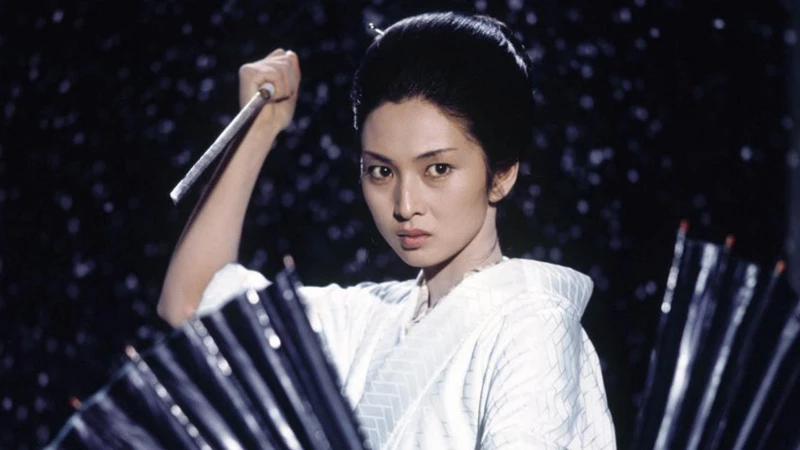
Lady Snowblood (1973): A Dark Tale of Revenge

kickstand-project.org – Lady Snowblood (Shurayukihime, 1973), directed by Toshiya Fujita, is a seminal Japanese exploitation film that has left an indelible mark on cinema, influencing numerous films in both the action and revenge genres. Based on the manga series by Kazuo Koike and illustrated by Kazuo Kamimura, the film tells the story of a woman named Yuki, who embarks on a brutal quest for vengeance against the criminals who destroyed her family. The film blends elements of the samurai genre with a gritty, stylized form of violence and vengeance, establishing a template for many films that followed, including Quentin Tarantino’s Kill Bill.

Though it is often categorized as a “revenge” or “exploitation” film, Lady Snowblood transcends its genre by offering a poignant exploration of the human cost of vengeance, the nature of justice, and the emotional toll of living a life defined by hatred. With its visually striking cinematography, unforgettable score, and complex central character, Lady Snowblood stands as both a genre-defining work and a deeply compelling character study.

Plot Overview

The film opens in the late 19th century during Japan’s Meiji era. Yuki (played by Meiko Kaji), a woman with striking red clothing and snow-white skin, seeks vengeance on a group of criminals who wronged her family years ago. Her story begins with a tragic flashback to her birth, where it is revealed that her mother, a victim of a brutal assault, gave birth to her daughter in prison. This act is not out of love, but as part of a larger plan for revenge. Yuki’s mother, who had been wronged by a gang of ruthless men, has raised her daughter in an environment of hatred and fury, training her for the sole purpose of exacting revenge on the individuals responsible for her suffering.

Yuki’s life is defined by her mother’s thirst for vengeance. The film follows her as she tracks down and eliminates the men who destroyed her family, one by one. Each death is a moment of catharsis for Yuki, but also deepens her personal conflict. The vengeance she seeks provides her with a purpose, but it also consumes her, leaving her isolated and emotionally numb. Her relationship with the world and the people around her becomes increasingly defined by bloodshed, culminating in a climactic confrontation that forces her to confront the true cost of her quest for justice.

The film’s narrative structure is nonlinear, with frequent flashbacks that slowly reveal the tragic backstory of Yuki’s mother, the motivation behind Yuki’s vengeance, and the philosophical implications of her actions. The movie unfolds with a sense of inevitability as Yuki systematically takes out each of her targets, but the emotional and psychological toll of this unrelenting pursuit of revenge begins to catch up with her.

Themes: Revenge, Justice, and Humanity

Revenge and Its Consequences

At the heart of Lady Snowblood is the theme of revenge. The film asks fundamental questions about the nature of vengeance and its consequences. Yuki’s quest for justice is born from deep personal trauma and an unyielding desire to right the wrongs done to her family. However, as she exacts her brutal revenge on the men who ruined her life, the film begins to suggest that revenge, while satisfying in the short term, may ultimately be hollow and destructive.

The film explores how revenge can be all-consuming. Yuki’s ability to kill is shown as a cold, almost mechanical skill, a trait she has inherited from her mother’s singular focus on vengeance. While she is successful in eliminating her enemies, each act of violence takes a toll on her soul, isolating her from any potential for emotional connection. The more successful she becomes in her mission, the more she finds herself trapped in an endless cycle of hatred and bloodshed.

Lady Snowblood suggests that revenge, while it may bring a sense of justice, ultimately leaves its practitioners empty and broken. Yuki’s pursuit of vengeance prevents her from truly living, rendering her a ghostly figure, incapable of engaging with the world around her except through violence. The film highlights the emptiness that comes with living a life defined by vengeance.

Justice and Morality

The film presents a morally complex landscape where justice is not always clear-cut. Yuki’s actions, while driven by a sense of justice and a desire to right the wrongs done to her family, often blur the line between right and wrong. She becomes a symbol of vengeance—her righteous cause is subverted by the brutal methods she uses to achieve it.

Lady Snowblood challenges the traditional notions of justice, asking whether the ends can justify the means. It presents the audience with the dilemma of whether Yuki’s actions can be seen as justified or whether they are ultimately a form of blind, destructive violence. Her ruthless pursuit of vengeance creates a morally ambiguous situation, in which the lines between the victim and the perpetrator become increasingly difficult to distinguish.

The film also examines the impact of institutionalized injustice. Yuki’s family was wronged by a group of criminals, but the larger societal structures of the time fail to bring them to justice. In this context, Yuki’s vigilante actions can be seen as a response to a world where traditional systems of justice are either corrupt or ineffective.

Humanity and Alienation

As Yuki moves further into her journey of revenge, she becomes increasingly alienated from her humanity. Her capacity for love, compassion, and even normal human interaction diminishes, as her mission takes precedence over everything else in her life. The film poignantly explores the cost of dedicating oneself to vengeance, suggesting that the price of retribution is not just the lives of others, but also the forfeiting of one’s own humanity.

The film contrasts Yuki’s cold, emotionless persona with moments of vulnerability, particularly in her brief interactions with a few sympathetic characters. These moments underscore the possibility of redemption and human connection, which remain forever out of reach for Yuki due to the all-encompassing nature of her mission. Lady Snowblood serves as a meditation on the toll of living a life of vengeance—how it distances individuals from their innate humanity and destroys their capacity for compassion.

Cinematic Style and Visuals

The visual style of Lady Snowblood is one of the film’s most striking features. Director Toshiya Fujita and cinematographer Chishi Maki expertly use color, composition, and lighting to heighten the film’s intense emotional and dramatic impact. The film is famous for its bold and dramatic use of color, particularly in its depiction of bloodshed. The contrast of bright red blood against the stark, snow-covered landscape serves as a visual metaphor for the collision of innocence and violence at the core of the film.

The action sequences in Lady Snowblood are brutal yet elegantly choreographed, combining the sharp swordplay of samurai films with the stylized violence typical of exploitation cinema. The film’s fight scenes are fast-paced and intense, with the camera often lingering on the violence in ways that emphasize its coldness and inevitability. The film’s action scenes, while visually exciting, also convey the emotional and psychological toll of the violence being committed.

The film’s score, composed by the legendary composer, Tôru Takemitsu, is haunting and atmospheric, further enhancing the film’s melancholic and dark tone. The music provides a stark contrast to the intensity of the action, creating a sense of emotional depth and tragedy that elevates the film beyond its genre roots.

Reception and Legacy

Lady Snowblood was well-received upon its release and has since gained a cult following, particularly for its groundbreaking use of stylized violence and its complex portrayal of a female protagonist. Meiko Kaji’s performance as Yuki became iconic, and her character is now one of the most recognizable in Japanese cinema. Kaji’s portrayal of a woman driven by vengeance, yet emotionally torn by the consequences of her actions, remains a defining feature of the film.

The film’s influence can be seen in a variety of works, most notably Quentin Tarantino’s Kill Bill, which pays direct homage to Lady Snowblood in its themes, aesthetic choices, and the character of the Bride, who similarly embarks on a path of bloody vengeance. Lady Snowblood also helped pave the way for other revenge-driven films, influencing both Asian and Western filmmakers.

Today, Lady Snowblood is regarded as a seminal film in the revenge genre, recognized for its visual style, feminist undertones, and exploration of themes like justice, vengeance, and the cost of violence. It remains a landmark in both Japanese cinema and the global action genre.

Conclusion

Lady Snowblood (1973) is a powerful and visually striking film that explores the complexities of revenge, justice, and humanity. Through its central character, Yuki, the film delves into the psychological and emotional toll of living a life defined by vengeance. With its bold cinematography, iconic performances, and haunting themes, Lady Snowblood stands as a landmark in Japanese cinema and continues to influence films across the globe. A tale of brutality and pathos, Lady Snowblood is a poignant meditation on the devastating cost of retribution and the toll it takes on the soul.