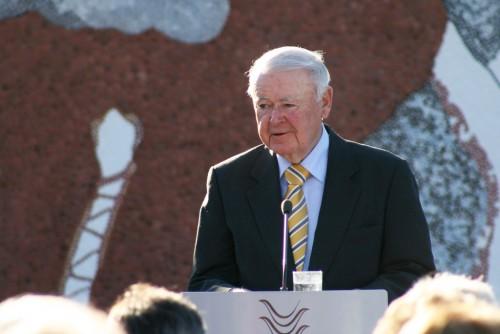
Sir William Deane: Governor-General of Australia (1996–2001)

kickstand-project.org – Sir William Deane served as the 22nd Governor-General of Australia from 1996 to 2001, a period marked by significant political and social changes within the country. Deane was an esteemed figure who brought a sense of dignity, compassion, and moral authority to the office. His tenure saw him advocate for reconciliation between Indigenous and non-Indigenous Australians and address national issues with a profound sense of empathy and integrity. Deane is remembered as a Governor-General who consistently upheld the values of unity, justice, and respect for all Australians.

Early Life and Education

William Patrick Deane was born on January 4, 1931, in Brisbane, Queensland. Growing up in Australia during the Great Depression, Deane developed a strong sense of community and social responsibility. He attended the University of Queensland, where he studied law, and graduated with first-class honors. Deane’s legal career began in earnest when he became a barrister in Brisbane, and he quickly gained a reputation for his intelligence, thoroughness, and fair-minded approach to the law.

Deane’s legal prowess and commitment to justice led him to a distinguished career in the Australian judiciary. He was appointed as a judge of the Federal Court of Australia in 1982, and later, in 1988, he became the Chief Justice of the High Court of Australia. As a jurist, Deane was known for his progressive views on social justice, human rights, and the protection of individual freedoms. His reputation as a fair and compassionate judge earned him respect across political and ideological divides.

Appointment as Governor-General

In 1996, after the retirement of Bill Hayden, Prime Minister John Howard appointed Sir William Deane as Governor-General of Australia. His appointment was well-received, as Deane was widely regarded as a person of high moral character and intellectual capacity. Deane’s background in law, his commitment to human rights, and his reputation as a principled leader made him an ideal candidate to serve as the Queen’s representative in Australia.

Deane’s appointment was also significant for the fact that he was the first Governor-General to be appointed following the election of the Howard government. At the time, there were debates about Australia’s future as a constitutional monarchy and the possibility of becoming a republic. Deane’s appointment was seen as a steadying influence during this period of national reflection on the country’s political future.

Tenure as Governor-General (1996–2001)

Sir William Deane’s time as Governor-General was marked by his focus on promoting national unity and addressing important social and moral issues. He was a Governor-General who understood the importance of the office as a symbol of Australian identity and values, and he used his position to advocate for the betterment of society.

One of the defining moments of Deane’s tenure came during the 1999 Australian republican referendum. The issue of whether Australia should become a republic was one of the most significant political debates in the country’s history. Deane, although a supporter of republicanism, carefully navigated his role as Governor-General, remaining politically neutral. He respected the democratic process, and his dignified stance allowed the debate to unfold without the interference of the office of the Governor-General.

During his time in office, Deane became a strong voice for reconciliation with Australia’s Indigenous peoples. His support for the reconciliation movement and the national apology for the “Stolen Generations” was pivotal. Deane worked closely with Indigenous leaders and advocates, encouraging a national conversation about Australia’s history and its impact on Indigenous communities. In 1997, Deane famously delivered a speech in which he spoke of the importance of acknowledging the historical wrongs committed against Indigenous Australians, including the forced removal of Indigenous children from their families.

Deane’s advocacy for Indigenous rights was also reflected in his personal efforts to connect with Indigenous communities across the country. He visited remote Indigenous communities and used his platform as Governor-General to promote a message of inclusion and healing. His commitment to reconciliation was an integral part of his legacy, and he played an essential role in raising awareness of the need for a genuine and ongoing dialogue between Indigenous and non-Indigenous Australians.

Leadership in Times of Crisis

Deane’s leadership during times of national crisis was marked by his empathy, wisdom, and strong moral compass. One of the most notable moments of his tenure occurred during the 1999 death of the well-known Australian cricketer, Phil Hughes. Deane’s message of solidarity and reflection during the grieving period exemplified his ability to connect with the Australian people on a personal level.

Another pivotal moment in Deane’s tenure was his response to the 1998 Sydney to Hobart yacht race disaster. In December 1998, six sailors lost their lives during the race due to severe storms. Deane’s response to the tragedy was one of compassion and support. He reached out to the families of the victims, providing comfort and acknowledging the bravery of the sailors involved in the event.

Additionally, Deane was involved in addressing the concerns of Australia’s refugees and asylum seekers. While he did not directly intervene in policy decisions, he often spoke on the need for Australia to maintain a humane and compassionate approach to immigration, emphasizing that Australia’s success as a nation was rooted in its inclusivity and openness to people from diverse backgrounds.

Resignation and Legacy

In 2001, Sir William Deane completed his term as Governor-General and was succeeded by Dr. Peter Hollingworth. Deane’s resignation came after five years of exceptional service, during which he had solidified his position as one of the most respected and influential figures in Australian history. His tenure as Governor-General was marked by his commitment to social justice, national unity, and his tireless efforts to promote reconciliation with Indigenous Australians.

Deane’s impact on the office of Governor-General was profound. He redefined the role, bringing greater visibility to moral and ethical issues, particularly in the realms of Indigenous rights and social justice. His leadership set a high standard for future holders of the office, demonstrating that the Governor-General’s role could be more than ceremonial—it could be an active force for positive social change.

Deane’s legacy is also tied to his personal qualities. He was known for his humility, his ability to listen to others, and his dedication to public service. His time as Governor-General earned him widespread admiration, and he left an indelible mark on the country he served so faithfully.

Conclusion

Sir William Deane’s tenure as Governor-General of Australia was marked by moral clarity, compassion, and a deep commitment to the values of justice and reconciliation. His leadership during significant national events, his advocacy for Indigenous Australians, and his role in guiding the country through debates about its future left a lasting legacy.

Deane is remembered as a Governor-General who used his position to bring attention to important social issues, including Indigenous rights, national unity, and compassion toward vulnerable communities. His time in office stands as a testament to the role of the Governor-General as more than a ceremonial figure, but as a moral and ethical leader who helped shape the values of modern Australia.
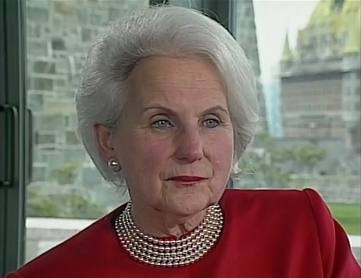
Jean Sauvé: The Governor General of Canada (1984–1990)

kickstand-project.org – Jean Sauvé served as the 23rd Governor General of Canada from 1984 to 1990, becoming the first woman to hold this prestigious office in the history of the country. Her appointment marked a significant milestone for women in Canada, symbolizing progress in gender equality and the recognition of women’s potential in public life. Sauvé’s tenure as Governor General was defined by her strong advocacy for social issues, particularly in the areas of youth, education, and environmental conservation. She also navigated a period of significant political change, including the development of Canada’s constitutional framework, evolving national identity, and challenges related to Quebec’s place in the Canadian federation.

Early Life and Career

Jean Sauvé was born on September 24, 1922, in the city of Montreal, Quebec. Raised in a Francophone family, Sauvé was deeply connected to the French-Canadian cultural experience, which shaped her understanding of Canada’s bilingual and multicultural identity. She studied at the University of Montreal, earning a degree in philosophy, and soon became involved in the public sphere through journalism and activism.

In the 1950s, Sauvé began her career in media as a reporter and editor, gaining attention for her sharp intellect, dedication, and thoughtful commentary on national issues. As a journalist, she became one of the leading figures in Canadian media, known for her passion for social justice and public service. Her journalistic career provided a platform for her to advocate for important causes, and she used her voice to address the pressing issues of the time.

Her transition into politics came in the 1970s, when she was elected as a Member of Parliament for the Liberal Party. Sauvé quickly rose through the ranks, holding several significant positions in the Canadian government, including Minister of State for Science and Technology and Minister of the Environment. She was widely respected for her work in these areas, particularly her efforts to advance environmental policies and promote Canada’s scientific research and technological development.

Throughout her career, Sauvé was known for her dedication to public service, her deep understanding of social issues, and her ability to engage with both Francophone and Anglophone Canadians. Her career exemplified the values of hard work, inclusivity, and compassion, qualities that would later define her role as Governor General.

Appointment as Governor General of Canada

Jean Sauvé was appointed Governor General of Canada by Queen Elizabeth II on May 14, 1984, succeeding Edward Schreyer. Her appointment was groundbreaking not only because she was the first woman to hold the position but also because it represented a shift in the role of the Governor General. Sauvé’s career as a journalist, politician, and advocate for social causes made her an ideal candidate to represent a modern, inclusive Canada.

At the time of her appointment, Canada was facing numerous political challenges, including questions surrounding Quebec’s status in the federation, the ongoing debate over constitutional amendments, and the country’s evolving national identity. Sauvé’s unique background, her bilingualism, and her experience in both the public and private sectors made her a natural choice to lead the country through this complex period.

As Governor General, Sauvé was tasked with serving as a representative of the Crown in Canada, symbolizing national unity, and ensuring the smooth operation of the Canadian government. Sauvé’s ability to relate to Canadians from all walks of life—regardless of their cultural background or political views—allowed her to bridge divides and promote a sense of inclusivity across the country.

Leadership During Her Tenure

Jean Sauvé’s tenure as Governor General was marked by her dedication to social causes, her advocacy for women’s rights and youth, and her emphasis on Canadian values such as unity, multiculturalism, and environmental stewardship. She sought to make the office of Governor General more accessible and representative of all Canadians, particularly women, minorities, and Indigenous peoples. Sauvé’s leadership was characterized by a deep sense of service to the people of Canada and a commitment to making a positive impact on the nation’s future.

Advocacy for Social Causes

During her time as Governor General, Sauvé used her platform to advocate for issues that were close to her heart, particularly those concerning social justice, youth, and the environment. She was a passionate advocate for young Canadians, believing that they were the key to Canada’s future. She worked to promote educational initiatives that empowered young people to engage with their communities and to take active roles in shaping their country.

Sauvé was particularly focused on the role of women in Canadian society. As the first woman to hold the office of Governor General, she understood the importance of breaking barriers and empowering women to succeed in all aspects of life. She supported initiatives that advanced women’s rights, championing gender equality both within Canada and on the global stage.

Her commitment to environmental causes was also a central aspect of her leadership. Sauvé was a strong advocate for sustainable development and worked to raise awareness about the environmental challenges facing Canada and the world. Her leadership on environmental issues helped to shape Canada’s position on climate change and sustainability during the late 20th century.

Promoting National Unity

One of the most significant challenges during Sauvé’s tenure as Governor General was fostering national unity amidst growing tensions between Quebec and the rest of Canada. As Quebec’s desire for greater autonomy continued to grow, Sauvé worked to promote dialogue and understanding between the federal government and the province. She was a staunch defender of Canada’s multicultural and bilingual character, advocating for policies that recognized the country’s diversity while emphasizing the importance of unity.

In addition to her diplomatic efforts within Canada, Sauvé represented Canada on the world stage, promoting Canadian values and strengthening ties with other nations. Her diplomatic work helped elevate Canada’s reputation internationally and contributed to the country’s growing role in global affairs.

A Symbol of Service and Integrity

As Governor General, Jean Sauvé sought to make the office more accessible and relevant to ordinary Canadians. She traveled extensively across the country, meeting citizens from all walks of life and promoting community involvement. Her visits to remote and Indigenous communities were particularly notable, as she sought to connect with Canadians who often felt marginalized from the national conversation.

Throughout her time in office, Sauvé emphasized the importance of public service, duty, and integrity. She was a tireless advocate for Canadians and worked to ensure that the office of Governor General was a symbol of fairness, unity, and inclusivity. Her commitment to service was reflected in her efforts to encourage young Canadians to take an active interest in public life and contribute to the betterment of their communities.

Legacy and Conclusion

Jean Sauvé’s time as Governor General was a groundbreaking period in Canadian history, characterized by her trailblazing leadership and her unwavering commitment to social causes. As the first woman to hold the office, Sauvé’s legacy is one of empowerment, inclusivity, and service. She was a powerful symbol of the progress Canada had made in terms of gender equality and social justice, and she remains an inspiring figure in the history of the country.

Her advocacy for youth, women, and the environment, along with her efforts to promote national unity and understanding, shaped Canada during a pivotal time in its development. Sauvé’s role in advancing these issues has had a lasting impact on Canadian society and continues to resonate today.

After her term as Governor General ended in 1990, Sauvé remained an important figure in Canadian public life. She continued to contribute to various causes, particularly those related to social justice, environmental conservation, and women’s rights. Jean Sauvé passed away on January 26, 1993, but her legacy as a champion for Canadian unity, equality, and public service endures.

Jean Sauvé’s time as Governor General serves as a reminder of the power of leadership to shape a nation, and her contributions to Canadian society continue to inspire future generations of leaders.